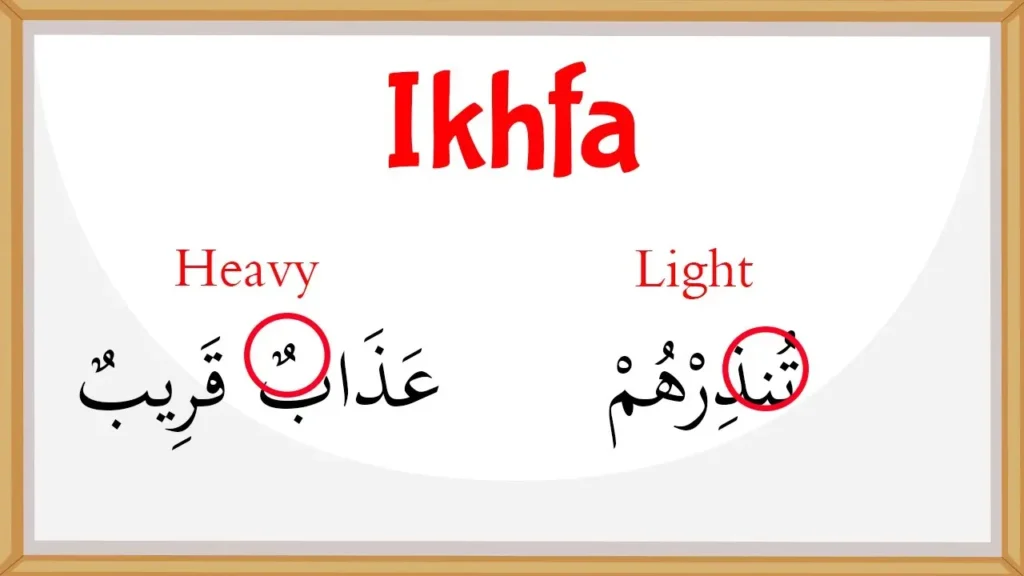
 Tajweed

If you’re a non-native Arabic speaker, learning how to recite the Quran with Tajweed can feel overwhelming at first. Sounds like ع, ح, and ق don’t exist in most other languages, and the rules governing them can seem endless. The good news is that thousands of adult learners have gone from stumbling over basic letters to reciting with confidence—and the path there is far more structured than it appears.
Tajweed is not about making your recitation sound beautiful overnight. It is the science of giving every Arabic letter its correct pronunciation, articulation point, and characteristics while reciting the Quran exactly as it was revealed and transmitted. Even beginners can develop accurate recitation by following a gradual learning process instead of trying to master every rule at once.
This guide walks you through the mindset, the essential Tajweed rules, and the daily practice habits that make correct Quran recitation achievable, even if you’re starting from zero. You’ll learn what to study first, how to avoid common mistakes, and how to build the confidence to recite the Quran correctly with consistent guidance and practice.
1. Renew Your Intention Before You Begin
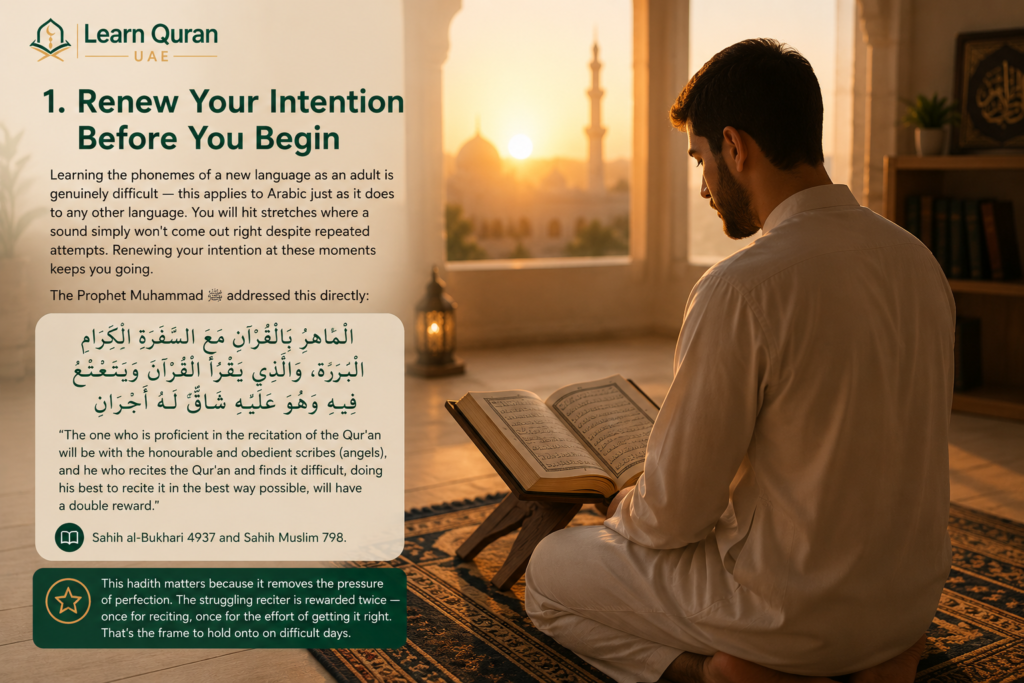
Learning the phonemes of a new language as an adult is genuinely difficult — this applies to Arabic just as it does to any other language. You will hit stretches where a sound simply won’t come out right despite repeated attempts. Renewing your intention at these moments keeps you going.
The Prophet Muhammad ﷺ addressed this directly:
“الْمَاهِرُ بِالْقُرْآنِ مَعَ السَّفَرَةِ الْكِرَامِ الْبَرَرَةِ، وَالَّذِي يَقْرَأُ الْقُرْآنَ وَيَتَتَعْتَعُ فِيهِ وَهُوَ عَلَيْهِ شَاقٌّ لَهُ أَجْرَانِ”
“The one who is proficient in the recitation of the Qur’an will be with the honourable and obedient scribes (angels), and he who recites the Qur’an and finds it difficult, doing his best to recite it in the best way possible, will have a double reward.”Sahih al-Bukhari 4937 and Sahih Muslim 798.
This hadith matters because it removes the pressure of perfection. The struggling reciter is rewarded twice — once for reciting, once for the effort of getting it right. That’s the frame to hold onto on difficult days.
2. Learn the Arabic Alphabet and Makharij al-Huruf
Before you can recite fluently, you need to master where each letter’s sound actually comes from. This is called Makharij al-Huruf — the exact points in the mouth, throat, or nose where a letter’s sound is produced.
Arabic has 28 letters, and a handful of them — particularly ع, ح, ق, and ض — have no direct equivalent in English or most other languages. These are the letters that trip up almost every beginner, so it’s worth isolating and drilling them early rather than avoiding them.
There are five main articulation zones, covering 17 specific exit points in total.
| Articulation Zone | Arabic Name | Example Letters |
| Empty space of the mouth and throat | Al-Jawf | Letters of Madd (ا, و, ي) |
| The throat (deep, middle, near) | Al-Halq | ء ه ع ح غ خ |
| The tongue (10 sub-points) | Al-Lisan | ق ل ن ر ت ط د, and more |
| The two lips | Ash-Shafataan | ب م و ف |
| The nasal cavity | Al-Khayshoom | Ghunnah (nasal sound) |
A practical way to isolate a Makhraj: pronounce the letter with a Sukoon preceded by a Fatha. Saying “أَبْ” (ab) lets you feel exactly where ب lands — on the lips, not the tongue or throat. Repeat this drill for each difficult letter individually before combining them into words.
Our Tajweed for Beginners course starts exactly here, with one-on-one Makharij correction before any rule is introduced — because a rule applied to a mispronounced letter doesn’t fix the underlying problem.

3. Learn the Rules of Noon Sakinah, Tanween, and Sifaat al-Huruf
Once your letters are accurate, the next layer is knowing how a letter’s sound changes depending on what follows it. This is where most self-taught reciters plateau, because these rules aren’t intuitive — they have to be learned directly.
Sifaat al-Huruf are the qualities that distinguish letters sharing the same Makhraj — for instance, ت and ط both come from the tongue, but ط is pronounced heavier (tafkheem) due to its Isti’la quality, while ت stays light (tarqeeq). Getting this wrong changes how the word sounds even when the letter itself is correct.
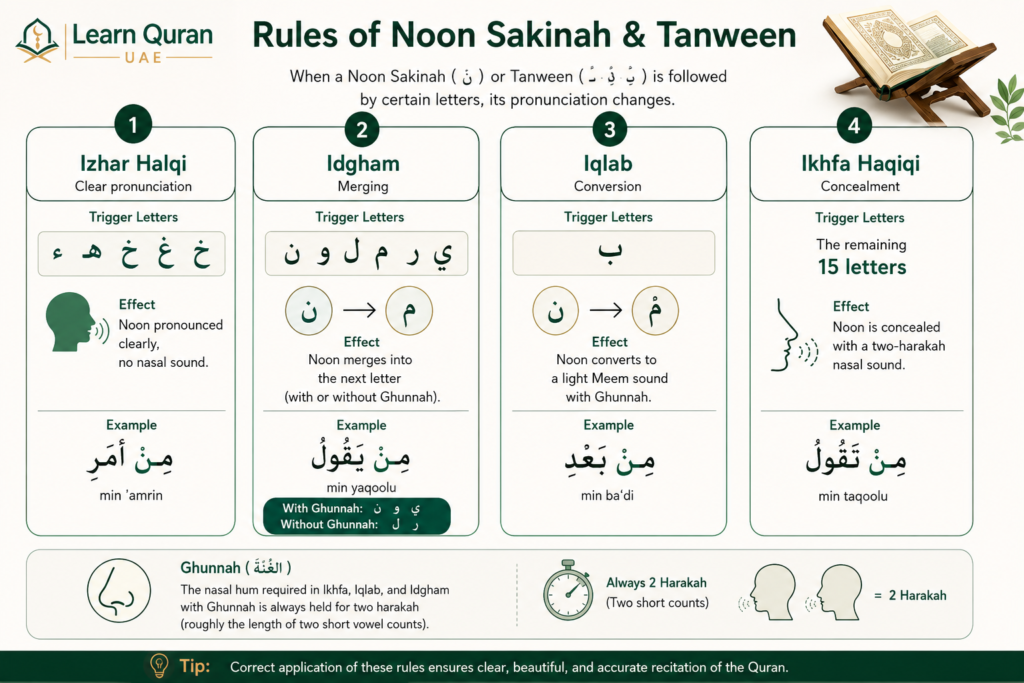
The rules of Noon Sakinah and Tanween govern what happens to a silent ن or a tanween mark depending on the letter that follows it. There are four categories:
| Rule | Arabic Name | Trigger Letters | Effect |
| Clear pronunciation | Izhar Halqi | ء ه ع ح غ خ | Noon pronounced clearly, no nasal sound |
| Merging | Idgham | ي ر م ل و ن | Noon merges into the next letter (with or without Ghunnah) |
| Conversion | Iqlab | ب | Noon converts to a light Meem sound with Ghunnah |
| Concealment | Ikhfa Haqiqi | The remaining 15 letters | Noon is concealed with a two-harakah nasal sound |
Ghunnah — the nasal hum required in Ikhfa, Iqlab, and Idgham with Ghunnah — is always held for two harakah, roughly the length of two short vowel counts. This is a common point of inconsistency among self-taught reciters: the nasal sound is either dropped entirely or held too long, and both errors are audible to a trained ear.
Experience a Live Quran Class
Watch a short sample from one of our online Quran classes and discover our engaging teaching style, interactive lessons, and personalized learning approach.
Start Learning Quran with Expert Tutors in the UAE
Accredited online Quran and Arabic classes tailored for adults and children. Schedule your session today.
Book Your Free Trial4. Don’t Be Afraid to Make Mistakes While You Practice
A belief that stops many beginners from starting is the idea that reciting imperfectly is somehow impermissible. This isn’t accurate, and holding onto it does real harm — it keeps people from ever attempting to recite at all.
Allah addresses this principle directly in the Quran:
“فَاتَّقُوا اللَّهَ مَا اسْتَطَعْتُمْ وَاسْمَعُوا وَأَطِيعُوا وَأَنفِقُوا خَيْرًا لِّأَنفُسِكُمْ ۗ وَمَن يُوقَ شُحَّ نَفْسِهِ فَأُولَٰئِكَ هُمُ الْمُفْلِحُونَ”
“So fear Allah as much as you are able, and listen and obey, and spend [in the way of Allah]; it is better for your selves. And whoever is protected from the stinginess of his soul — it is those who will be the successful.”Surah At-Taghabun, 64:16.
“As much as you are able” is the operative phrase. Effort within your current capacity is the standard — not flawless execution from day one. Recite what you can, correct it as you learn, and keep going.

5. Over-Stress a Sound First, Then Refine It
A practical technique that works well for the letters ح, ع, and ق specifically: exaggerate the sound well beyond what’s natural at first. Push it from deep in the throat harder than needed. Once you can produce the exaggerated version consistently, dial it back to normal intensity — the correct sound tends to emerge naturally at that point.
This works because these letters require a muscle position most non-Arabic speakers have never used. Over-stressing forces the mouth and throat into the right shape; refining afterward brings it down to natural speech.
Read also: Is Tajweed Obligatory? What Every Muslim Needs to Know Before You Recite
6. Listen to Qualified Reciters and Imitate Them Daily
Tajweed is fundamentally an oral tradition, which means listening is not optional supplementary material — it’s core practice. For beginners, choose a slow, clear reciter rather than a fast, melodic one. Shaykh Mahmoud Al-Husary is a common recommendation specifically because his pace and clarity make individual letters and Madd lengths easy to isolate and copy.

Listen for three things specifically:
- The precision of each letter’s articulation point
- The exact duration of Madd (elongation)
- The clarity of Ghunnah where it applies
Then repeat what you hear immediately, out loud, rather than just listening passively. Passive listening builds recognition; active repetition builds production — and only the second one improves your own recitation.
7. Practice in Short, Frequent Bursts — Not Long, Rare Sessions
You don’t need a dedicated hour or a formal setting to practice Makharij and Sifaat. Say the sounds whenever they come to mind — during a work break, while walking, while doing something else entirely. Consistency across many short sessions beats one long session per week, because muscle memory for pronunciation builds through repetition frequency, not session length.
Fifteen focused minutes a day, sustained over weeks, produces more improvement than an hour once every few days. This is one of the more overlooked mistakes in home study: learners try to “make up” for missed days with a marathon session, which doesn’t build the same muscle memory as daily short repetition does.
Our Advanced Tajweed course is structured around this principle — short, focused weekly sessions with a live instructor, rather than long infrequent ones, because that’s what the evidence from real students actually shows works.

8. Learn One Rule at a Time, Then Move On
Trying to absorb Izhar, Idgham, Iqlab, Ikhfa, and Madd all in the same week is a common cause of beginners giving up. Take one rule, apply it in real recitation until it’s automatic, and only then introduce the next.
A useful decision rule: if you have to consciously think through a rule every time it appears, you’re not ready to add a new one yet. Automaticity — applying the rule without stopping to recall it — is the signal that you can move forward.
This is also where working with an instructor accelerates progress considerably, since a teacher can catch a rule you’re applying inconsistently before it becomes a habit that’s harder to unlearn later.
9. Use Correct Pronunciation Outside of Recitation Too
Once you can pronounce ع correctly, use it the next time you say “assalamu alaikum” instead of reverting to the easier approximation. Once ح is solid, use it in “alhamdulillah.” Carrying the correct sound into everyday speech reinforces it far more than practicing it only during dedicated recitation time — and it removes the temptation to slip back into old habits the moment you’re not “practicing.”
Correct pronunciation of the Quran’s letters is a skill worth being visibly proud of, not something to downplay around others.
Read also: How to Learn the Quran by Heart? A Practical 10-Step Method for UAE Residents
See How Our Online Classes Work
Get a glimpse of a real online session and explore how students learn Quran with experienced teachers in a supportive and interactive environment.
Start Reciting the Quran with Confidence Today
You don’t need to get every letter perfect before you begin. What you need is a structured learning path, consistent practice, and a qualified teacher who can identify and correct mistakes that are difficult to notice on your own. With the right guidance, even sounds that seem impossible at first become natural through gradual practice and regular feedback.
At UAE Quran Academy, you’ll learn Tajweed step by step with experienced instructors who tailor each lesson to your current level. Whether you’re learning the Arabic alphabet, improving your Makharij, mastering the rules of Noon Sakinah and Tanween, or refining your overall recitation, every session is designed to help you make steady and measurable progress.
Our Online Quran Courses Include:
- Online Quran Classes in UAE
- Quran Classes for Kids
- Quran Classes for Adults
- Quran Classes for Ladies / Sisters
- Quran Classes for Men
- Quran Course for Beginners
- Quran Classes for Toddlers
- Weekend Quran Classes
- Intensive Quran Course
- Al-Azhar Quran Course
- Arabic & Quran Classes
- Zoom Quran Classes
- Skype Quran Classes
Start Learning Quran with Expert Tutors in the UAE
Accredited online Quran and Arabic classes tailored for adults and children. Schedule your session today.
Book Your Free Trial
Conclusion
Learning how to recite Quran with Tajweed rests on two things working together: technical accuracy — correct Makharij, Sifaat, and rule application — and a sustainable daily practice built on the right intention. Neither one alone gets you there.
Start with the letters that don’t exist in your first language, layer in the Noon Sakinah and Madd rules one at a time, and pair every week of self-practice with feedback from a qualified teacher who can hear what you can’t. Progress in Tajweed is steady rather than sudden — but with consistent short sessions and the right correction, fluent, confident recitation is well within reach.
Read also: Online Quran Memorization Programs in the UAE
FAQs
Is it a sin to recite Quran without correct Tajweed?
No. Reciting imperfectly while doing your best is not sinful — the Quran itself instructs believers to “fear Allah as much as you are able” (64:16). What matters is genuine effort and a commitment to improving, not flawless execution from your very first attempt.
How long does it take to learn Tajweed as an adult beginner?
It depends on your consistency more than your starting point. Learners who practice daily in short sessions and receive regular instructor feedback typically build a solid foundation in the core rules — Makharij, Sifaat, Noon Sakinah, and basic Madd — within a few months of steady, guided practice.
Do I need a teacher, or can I learn Tajweed from books and apps alone?
Books and apps can teach you the rules, but Tajweed is an oral tradition, and you cannot hear your own pronunciation errors reliably. A qualified teacher who listens and corrects you in real time is essential for turning theoretical knowledge into accurate recitation.
What’s the difference between Tajweed and Tarteel?
Tajweed refers to the specific rules of correct pronunciation — Makharij, Sifaat, and letter-interaction rules like Idgham and Ikhfa. Tarteel refers to the slow, measured, unhurried pace of recitation. You need Tajweed for accuracy and Tarteel for the pace that allows that accuracy to be applied properly.
Which letters are hardest for non-native Arabic speakers to learn?
Most beginners struggle most with ع (Ayn), ح (Haa), ق (Qaf), and ض (Dhad), since none of these have a close equivalent in English or most other languages. Isolating each one with the Sukoon-drill method and over-stressing it before refining tends to be the fastest way through this stage.
Can children start learning Tajweed at the same pace as adults?
Children generally acquire new phonemes more easily than adults, since their speech-sound learning window is still highly flexible. That said, the same core sequence applies at any age: master individual Makharij first, then Sifaat, then the interaction rules — just with lessons paced and gamified appropriately for a child’s attention span.




[…] For a simple start, read this guide on how to recite the Quran with Tajweed. […]