 Quran
Quran

Memorizing the Quran is one of the most rewarding commitments a Muslim can make, yet most people who attempt it stop within the first few months. The problem is rarely motivation — it’s the lack of a structured method that fits real life. If you want to learn Quran by heart and actually keep what you memorize, you need more than good intentions; you need a system.
This guide walks you through ten practical steps to memorize Quran by heart, drawn from techniques used by experienced Hifz teachers and structured around how memory actually works — not around unrealistic daily targets that lead to burnout.
Each of the ten steps below addresses a specific barrier that causes most self-taught memorizers to plateau or quit. They are sequenced deliberately: timing and environment come first because they determine how much your brain can actually retain before you even open the mushaf.
Got it — I’ll keep your exact 10 steps, format each as its own H2 (since you want them at H2 level), and add a bridge/expansion paragraph to each one to make every section a bit richer. Here’s the updated 10-step section, ready to drop into the article in place of the current step section:
1. Rise Up Early in the Morning Even if Hard in the UAE
Memorize as early as possible, ideally right after Fajr prayer. If you can pray Fajr at the mosque, even better — the walk and the early start set a focused tone for the rest of the day, well before commute traffic or work messages start competing for your attention.
After Fajr, resist the pull of your phone or TV. Use that window — when your mind is freshest — for memorization instead. Cognitive research on memory consolidation consistently shows that information learned earlier in a wakeful period is retained better than information crammed in later, once mental fatigue from a full UAE working day has set in.
This is also why many Hifz teachers treat the post-Fajr slot as non-negotiable rather than optional: it isn’t just spiritually fitting, it’s the one window in most people’s day that’s naturally free of accumulated mental clutter from work, errands, or screen time.

2. Use the Familiarity Technique for New Verses
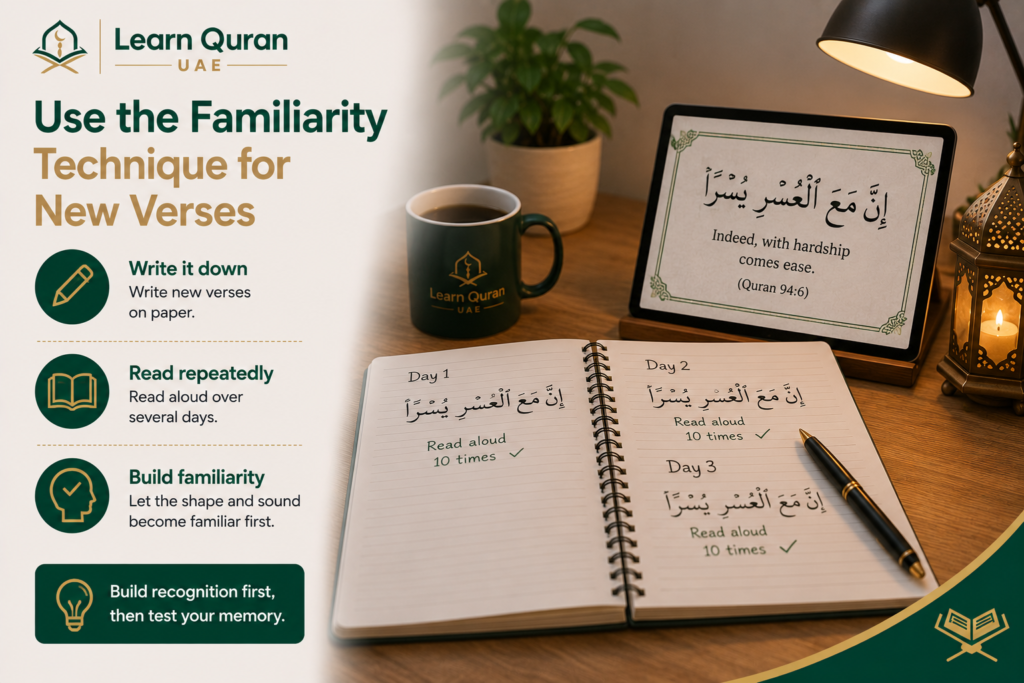
When you first encounter unfamiliar verses, they won’t stick after one or two reads — that’s normal, not a sign of weak memory. Write the verses down on paper, then read them repeatedly over several days until the shape and sound become familiar before you attempt to recall them from memory alone.
This technique works because it separates two distinct mental tasks — recognition and recall — instead of forcing both at once on day one.
In practice, this means giving yourself permission to spend two or three days just reading a verse aloud before testing yourself on it. Students who skip this step and jump straight to blind recall tend to memorize more slowly overall, because they’re fighting both tasks at once instead of building recognition first.
3. Recite What You Memorize in Every Salah
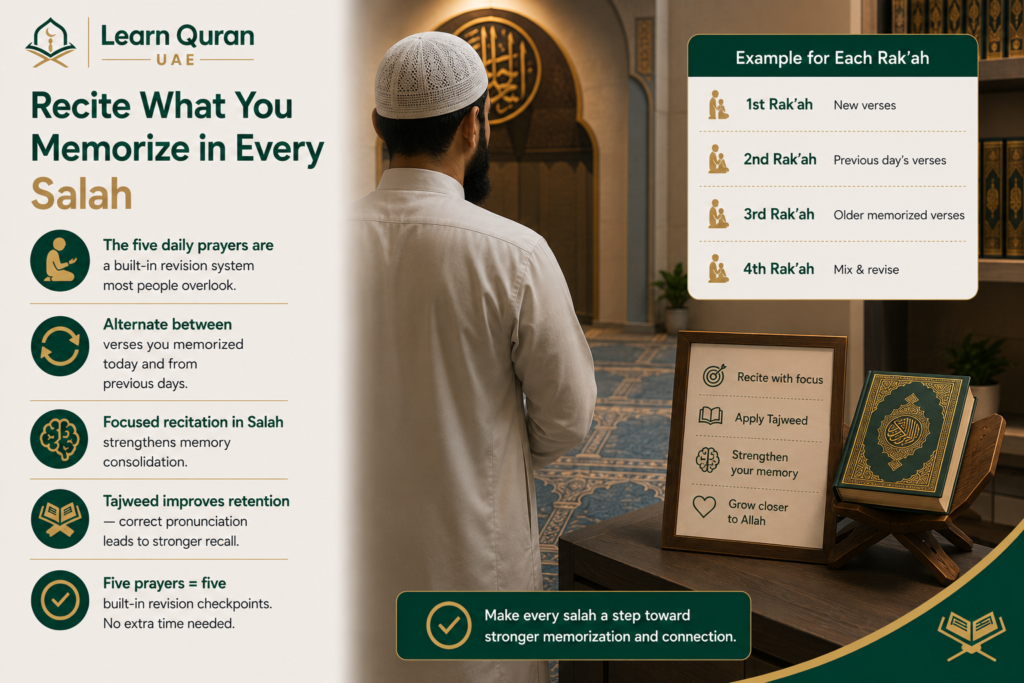
Many Muslims in the UAE find that using the five daily prayers as revision sessions helps them stay consistent despite busy schedules.
This works because Salah recitation isn’t passive repetition — it happens in a state of focused attention, which is exactly the condition under which memory consolidates most effectively. Structured Quran with Tajweed practice strengthens this further, since correct pronunciation reinforces correct recall — a verse memorized with accurate Tajweed is retained more reliably than one memorized with approximate pronunciation.
Used consistently, this turns five daily prayers into five built-in revision checkpoints — no extra time required, since you’re already praying regardless.
4. Create the Ideal Quran Memorization Environment at Home in the UAE
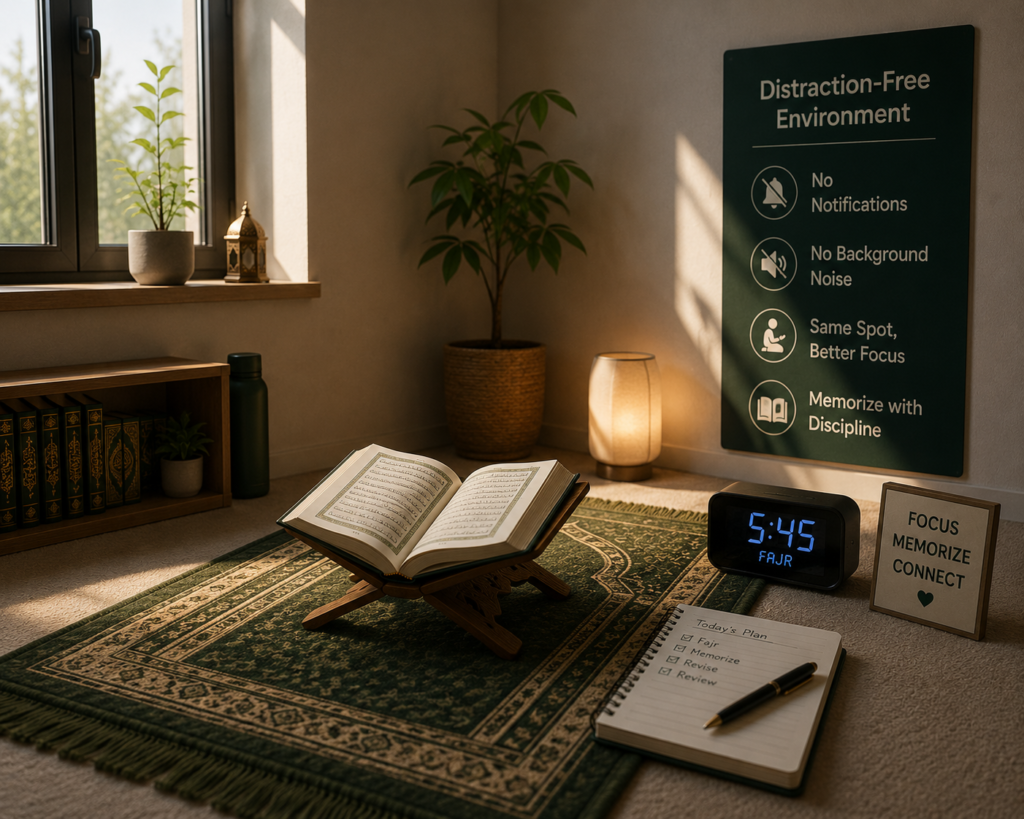
Finding a quiet place to memorize can be challenging in busy households, especially for families living in apartments across the UAE. Choose a consistent location, silence your phone, and let family members know this is your dedicated Quran time. A familiar environment helps your brain associate the space with focused memorization.
Even small environmental cues matter: sitting in the same spot each session signals to your brain that it’s “memorization time,” which shortens the warm-up period before you actually start retaining anything.
5. Acquire the Help of a Quran Tutor Matching Your Schedule in the UAE
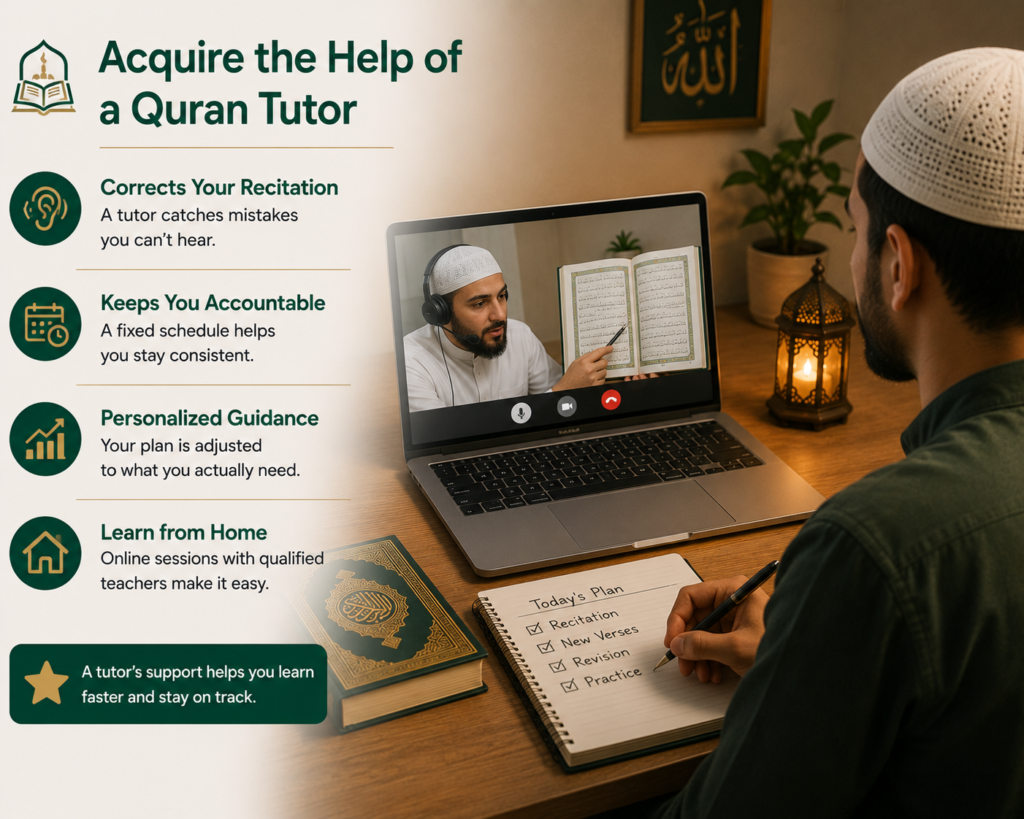
Self-study has a ceiling. A tutor catches pronunciation errors you cannot hear in your own recitation, holds you accountable to a schedule, and adjusts your plan when something isn’t working. Find a time slot that genuinely fits your routine — many students in the UAE do well with a session after Isha or after dinner, since sleep shortly afterward supports memory retention.
If a live tutor isn’t accessible yet, structured online sessions with qualified Quran teachers close this gap without requiring you to leave your home.
The accountability factor matters as much as the correction itself — a fixed weekly session with another person is far harder to skip than a personal goal you’ve set alone.
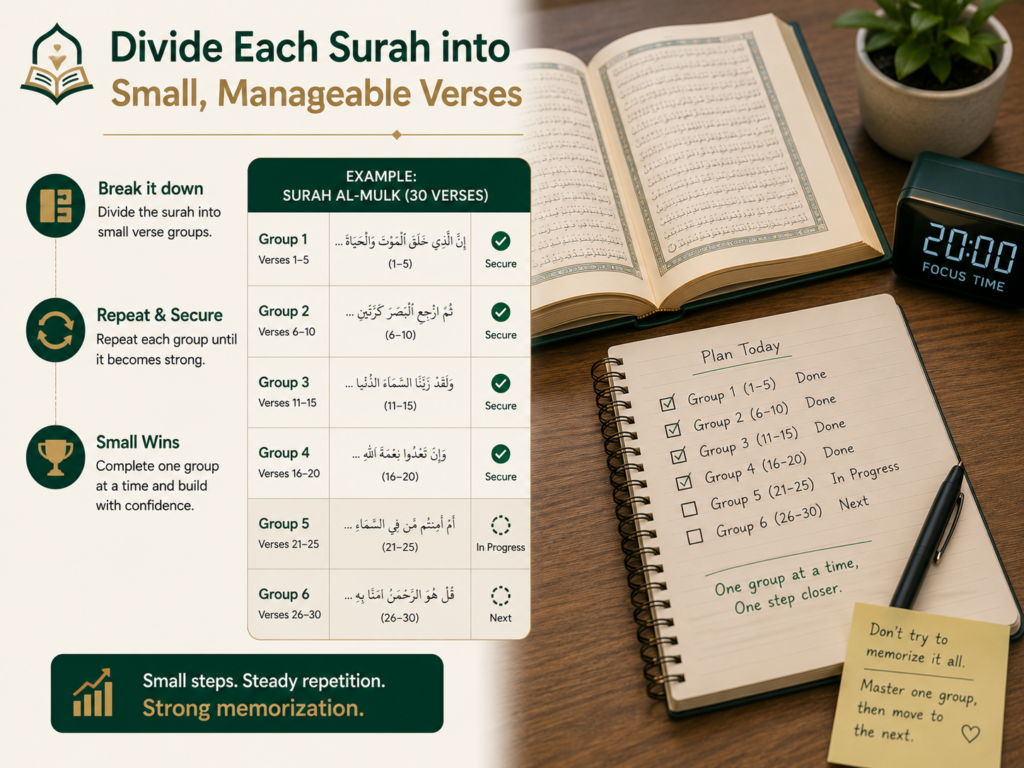
6. Divide Each Surah into Small, Manageable Verses
Avoid trying to memorize an entire page or long Surah in one sitting. Instead, divide each Surah into small groups of verses and master one section before moving on to the next. This method is especially effective for busy professionals, university students, and schoolchildren in the UAE who may only have 20 to 30 minutes available each day.
Small daily achievements build confidence and help you maintain steady progress without feeling overwhelmed. As each section becomes secure, connecting the verses together becomes much easier.
Read also: Is Tajweed Obligatory? What Every Muslim Needs to Know Before You Recite
Experience a Live Quran Class
Watch a short sample from one of our online Quran classes and discover our engaging teaching style, interactive lessons, and personalized learning approach.
Start Learning Quran with Expert Tutors in the UAE
Accredited online Quran and Arabic classes tailored for adults and children. Schedule your session today.
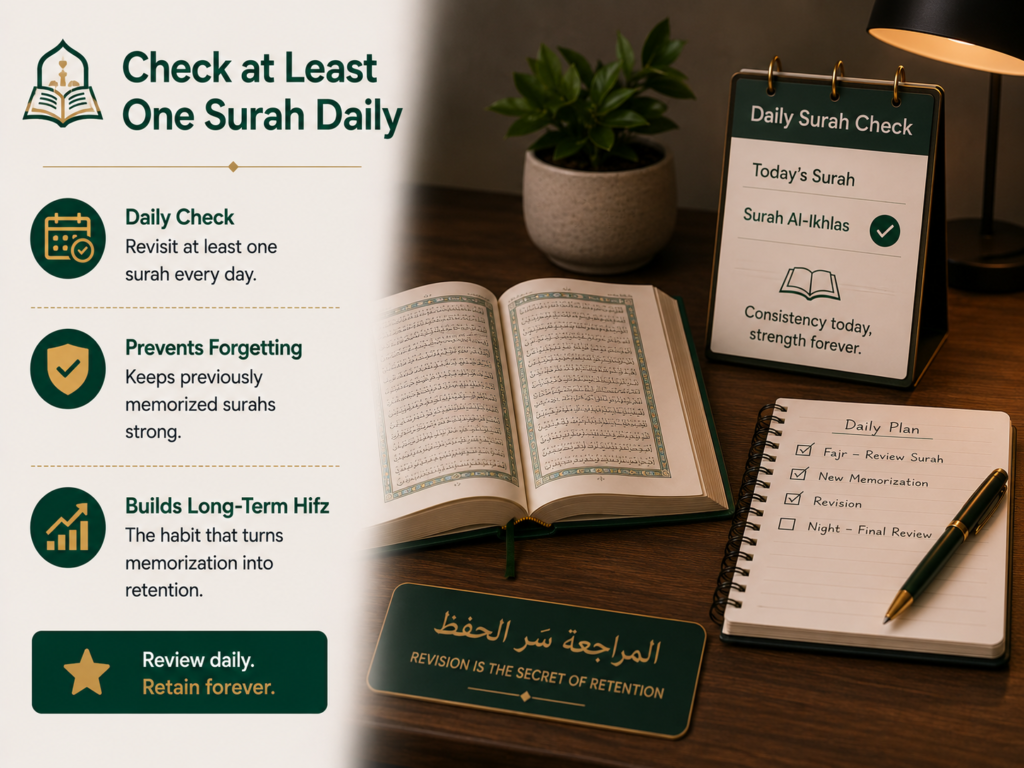
Book Your Free Trial7. Check at Least One Surah Daily
Set a minimum — even a short surah — that you revisit every single day, separate from new memorization. This daily check is what prevents previously memorized material from quietly slipping away while your attention is on new verses.
This single habit is often the difference between memorization that compounds and memorization that has to be redone later — review is not optional maintenance, it’s part of the actual learning process.
Even on busy workdays in the UAE, reviewing one short Surah is enough to keep your memorization strong.
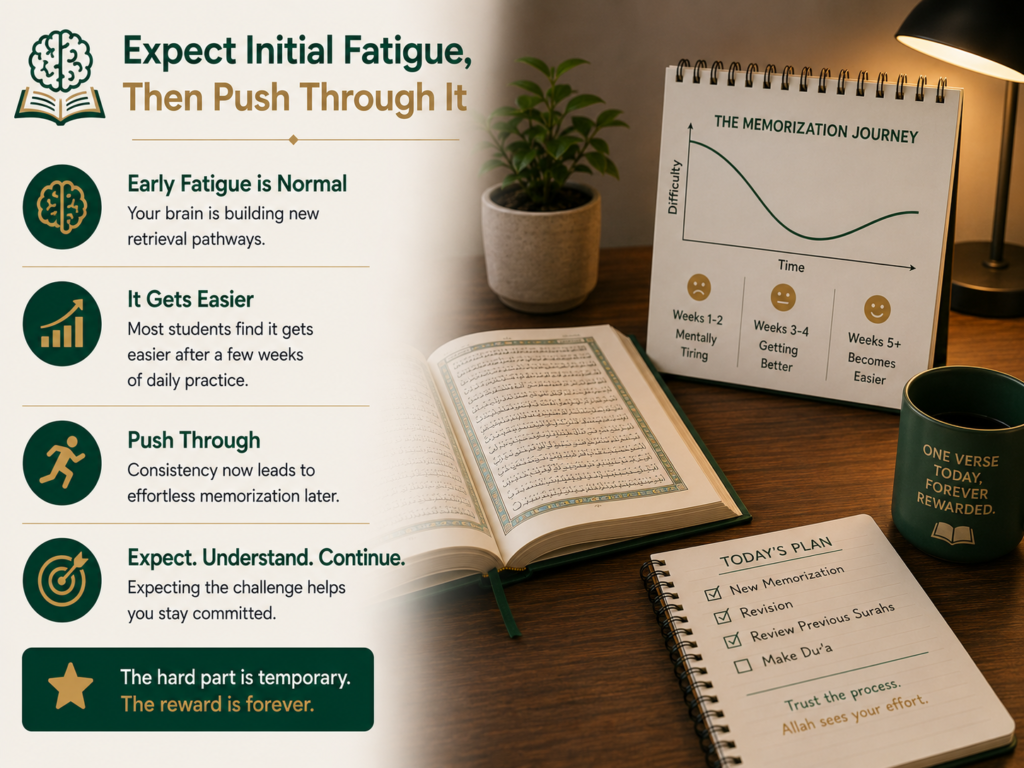
8. Expect Initial Fatigue, Then Push Through It
The first few weeks of memorizing the Quran can feel mentally demanding, particularly if you’re balancing work, school, or family life. Many students in the UAE experience this early challenge, but it doesn’t mean you’re progressing slowly or using the wrong method—it simply takes time for your brain to adapt to a consistent Hifz routine.
As memorization becomes part of your daily schedule, you’ll notice that recalling verses becomes easier and requires less effort. The students who achieve long-term success are usually the ones who remain consistent through this early stage instead of giving up because of temporary fatigue.
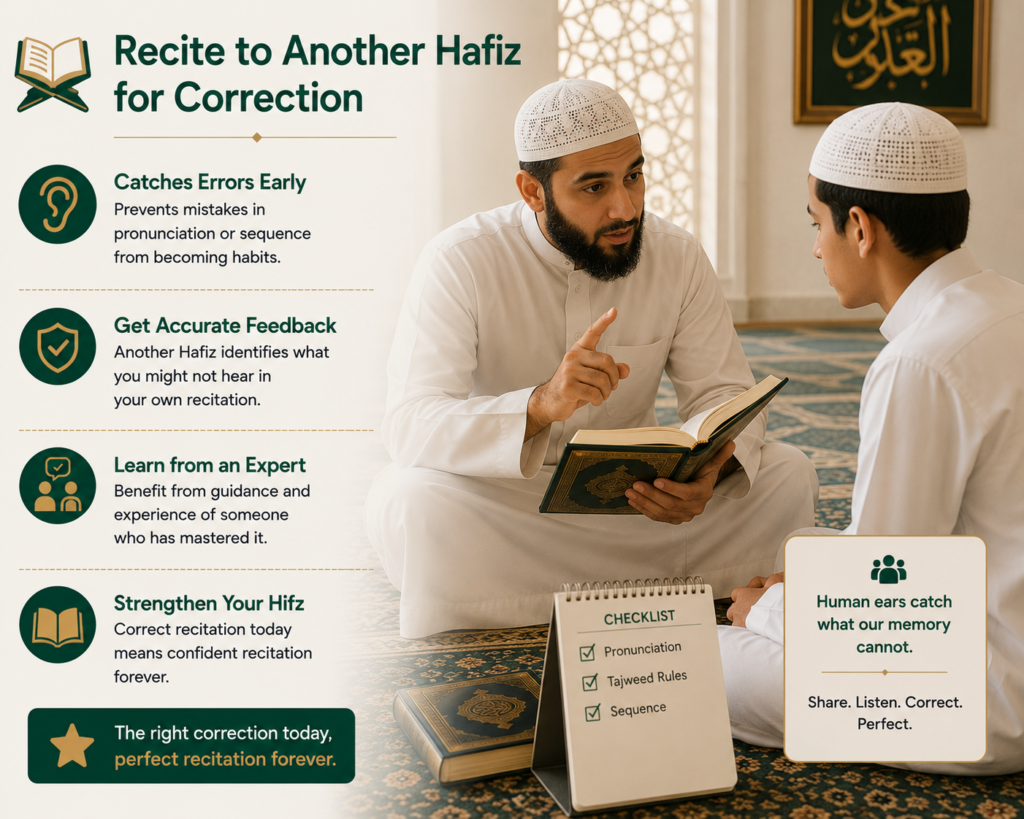
9. Recite to Another Hafiz for Correction
Never rely solely on your own judgment of your recitation. Recite what you’ve memorized to someone who has already memorized it — a teacher, an Imam, or a fellow Hafiz — so errors in pronunciation or sequence are caught early, before they become permanent habits.
This is the same logic behind Step 5’s tutor recommendation — the human ear catches what your own memory cannot, since you can’t reliably judge your own pronunciation against a standard you haven’t fully internalized yet.
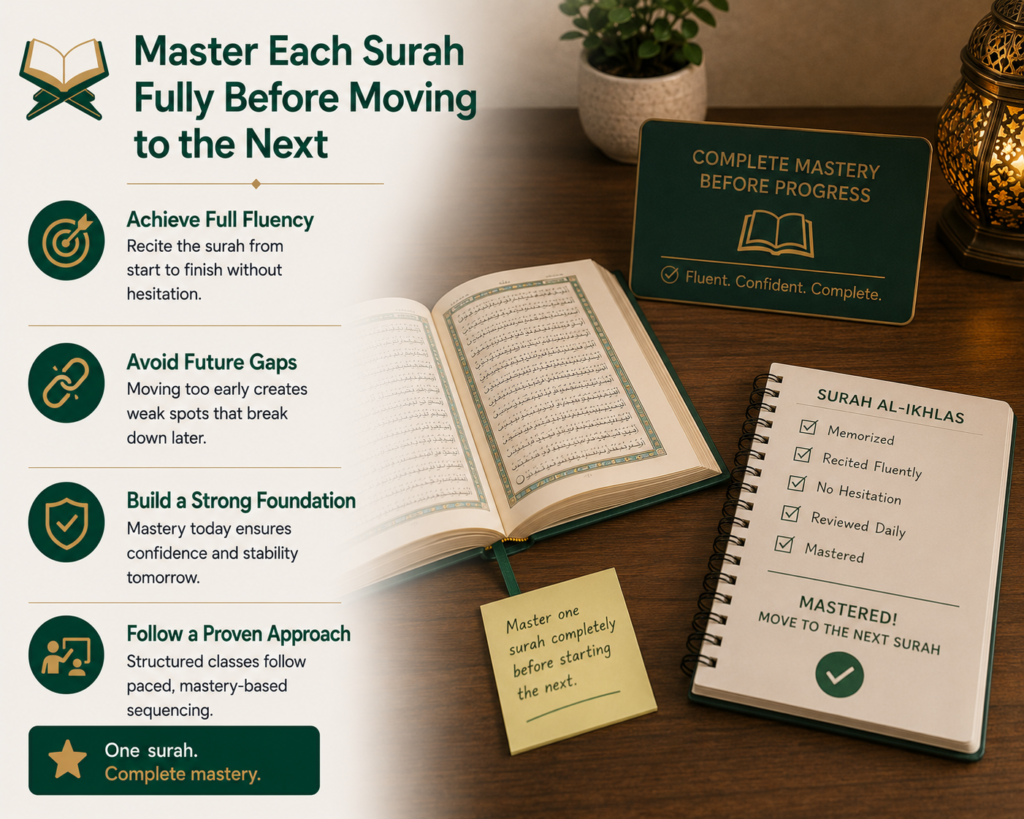
10. Master Each Surah Fully Before Moving to the Next
Don’t progress to a new surah until you can recite the current one fluently, start to finish, without hesitation. Moving on too early is one of the most common reasons memorization collapses later — gaps that seemed minor at the time compound as your memorized portion grows.
If you’re memorizing as a complete beginner, structured classes for beginners apply exactly this kind of paced, mastery-based sequencing rather than rushing volume.
Read also: How to Recite Quran with Tajweed? A Step-by-Step Guide for Beginners
Common Mistakes That Undo Quran Memorization
The single biggest cause of forgotten memorization isn’t a weak memory — it’s memorizing without review. The Quran, by its nature, requires constant reinforcement; verses not revisited regularly fade even after being fully memorized.
| Mistake | Why It Fails | What to Do Instead |
| Memorizing large portions at once | Causes mental overload and rapid forgetting | Limit new memorization to small, manageable verse groups |
| Skipping daily review | Previously memorized material fades without reinforcement | Review yesterday’s portion daily, last week’s weekly |
| Comparing your pace to others | Leads to frustration and abandoning the plan | Track only your own consistency, not speed |
| Memorizing without a teacher | Pronunciation errors embed silently into memory | Recite regularly to a tutor or Hafiz for correction |
| Inconsistent timing | The brain relies on routine to consolidate memory | Fix the same time daily, ideally after Fajr |
How Long Does It Take to Memorize the Quran in the UAE?
There is no single timeline, since it depends on age, available daily time, and consistency rather than raw ability. Children often progress faster early on because their minds are less burdened by distraction, while adults tend to retain meaning-based memorization more deeply once they push through the initial learning curve.
What matters more than speed is consistency: a steady daily habit, even a short one, outperforms irregular long sessions every time.
Why Children Benefit from Starting Quran Memorization Early?
Childhood is widely regarded by Hifz teachers as the ideal stage to begin memorization, since the mind at that age is comparatively free of the daily distractions that slow adult learners down. Children who start young also tend to memorize with a quality and fluency that becomes harder to replicate later in life.
If your child is ready to begin, age-appropriate Quran classes for toddlers introduce memorization gently — through short surahs, repetition, and listening — before formal reading instruction even begins.
The Reward of Becoming a Hafiz
A Hafiz is someone who has memorized the Quran in full, and Islamic tradition assigns this achievement a distinct and elevated status. The Hafiz is given precedence to lead prayer as Imam, and his rank in Paradise is tied to the last verse he memorized — a tradition reported in the hadith on the authority of the Prophet ﷺ.
Beyond status, the Quran itself becomes an intercessor for the Hafiz on the Day of Judgment, as referenced in the hadith cited earlier in this article. This dual reward — in this life through knowledge and standing, and in the Hereafter through intercession — is what continues to motivate students through the more difficult stretches of memorization.
Men committed to reaching this level often benefit from a dedicated, structured track. Quran classes for men at UAE Quran Academy are designed around exactly this kind of long-term Hifz commitment, with consistent teacher accountability built into the schedule.
See How Our Online Classes Work
Get a glimpse of a real online session and explore how students learn Quran with experienced teachers in a supportive and interactive environment.
Read also: Best Quran Academies in the UAE
Build a Memorization Plan That Actually Works — Start with a Qualified Tutor
A clear method gets you only part of the way. The other part is correction — having someone who can hear your recitation, catch what you can’t hear yourself, and keep you accountable to a realistic schedule.
Whether you live in Dubai, Abu Dhabi, Sharjah, or another emirate, consistency matters more than speed. Many students find that scheduling memorization sessions around Fajr, work hours, or school commitments helps them maintain steady progress throughout the year.
UAE Quran Academy pairs students with qualified Quran tutors who structure your memorization plan around your pace, correct your Tajweed as you go, and provide the consistent accountability that self-study alone cannot offer.
Our Quran Courses
- Noorani Qaida Course
- Noorani Qaida for Kids Course
- Noorani Qaida with Tajweed Course
- Noor Al-Bayan Course
- Quran Reading Course
- Quran Reading for Kids Course
- Quran Reading for Beginners Course
- Quran Reading with Tajweed Course
- Quran Recitation Course
- Quran Recitation for Kids Course
- Quran Tafseer Course
- Tafseer for Kids Course
- Quran Ijazah Program
- Tajweed Ijazah Course
- Ten Qirat Course
Enroll today and start learning the Quran from the comfort of your home with expert instructors at UAE Quran Academy.
Start Learning Quran with Expert Tutors in the UAE
Accredited online Quran and Arabic classes tailored for adults and children. Schedule your session today.
Book Your Free Trial[Book Your Free Trial Lesson Today]

Conclusion
Learning Quran by heart is achievable for anyone willing to follow a consistent method rather than chase speed. The ten steps in this guide — from early morning timing and a distraction-free environment to teacher correction and full mastery before moving on — work together because they address both sides of memorization: encoding new verses and protecting what you’ve already learned.
Start with one small, fixed daily habit. Whether you’re a complete beginner or returning to memorization after a break, the principle stays the same: small, steady, reviewed daily beats large, rushed, and forgotten.
Frequently Asked Questions
What Does It Mean to Learn Quran by Heart?
To learn Quran by heart means committing the verses of the Quran to memory through repeated, structured recitation until they can be recalled accurately without reading from the text. This process is known in Arabic as Hifz and a person who has completed it is called a Hafiz.
The Prophet Muhammad ﷺ emphasized the value of this practice directly. As reported in Sahih Muslim, he said:
اقْرَءُوا الْقُرْآنَ فَإِنَّهُ يَأْتِي يَوْمَ الْقِيَامَةِ شَفِيعًا لِأَصْحَابِهِ
“Recite the Quran, for it will come on the Day of Resurrection as an intercessor for its companions.” — Sahih Muslim 804
This hadith is often cited by Hifz teachers as the foundational motivation behind memorization — it isn’t only an academic exercise, but an act of worship with lasting spiritual return.
What is the best time of day to learn Quran by heart?
The best time is early morning, right after Fajr prayer, when the mind is freshest and least distracted. Many students also find a quiet evening slot effective if morning sessions aren’t possible.
How many verses should I memorize per day?
Most teachers recommend small, manageable verse groups rather than a fixed large number — quality and full mastery of each portion matters more than the count. Beginners often start with two to three verses daily and adjust based on retention.
Can I learn Quran by heart without a tutor?
You can begin alone, but pronunciation errors are difficult to catch in your own recitation. A tutor or experienced Hafiz provides correction that prevents mistakes from becoming permanent habits.
Why do I keep forgetting verses I’ve already memorized?
The most common cause is skipping daily review. Memorized verses fade without regular reinforcement, so a steady review schedule — daily, weekly, and monthly — is essential alongside new memorization.
Is childhood the best age to start memorizing the Quran?
Childhood is often considered ideal because children’s minds are comparatively free of distraction, but adults can memorize effectively too, especially when they combine repetition with understanding the meaning of what they recite.



Leave a Reply